

| Category | Stretch Marks Treatment |
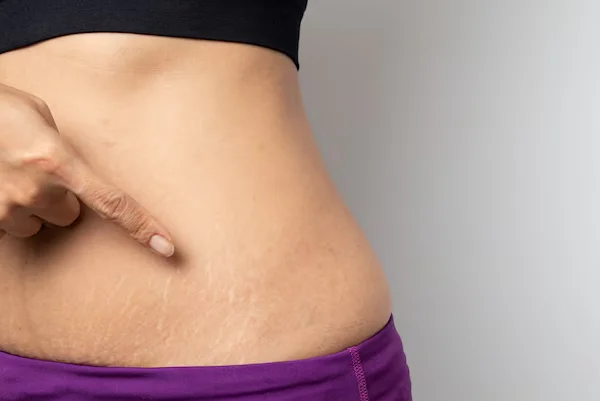
Stretch marks are long, narrow lines or streaks that develop when the skin stretches or changes rapidly. They commonly appear on the abdomen, thighs, hips, breasts, buttocks, and upper arms. Initially, stretch marks may look pink, red, purple, or darker than the surrounding skin. Over time, they often become lighter and may appear white or silvery.
Stretch marks are common and usually harmless, but some people seek treatment to improve their appearance and skin texture. If you are looking for stretch marks treatment in Greater Kailash, Dr. Sirisha Singh can assess your skin and discuss suitable treatment options based on the age, location, colour, and severity of the marks.
Although stretch marks cannot always be removed completely, selected treatments may help make them less noticeable. Results vary according to skin characteristics and the treatment used.
Stretch marks develop when the skin stretches or shrinks quickly, affecting the collagen and elastin fibres that support its structure. Several factors may contribute to their development.
Some individuals are more prone to stretch marks because of genetic factors and differences in skin characteristics. If stretch marks appear suddenly without an obvious reason, are unusually extensive, or develop alongside other symptoms, seek medical assessment.
Stretch marks can look different depending on how recently they developed and the person's skin tone.
Newer stretch marks may appear red, pink, purple, or darker than the surrounding skin. They may sometimes feel slightly raised or itchy. These marks may respond differently to treatment than older, pale marks.
Older stretch marks often become lighter, flatter, and more noticeable because of their contrast with the surrounding skin. They can be more challenging to improve, although selected treatments may help soften their appearance.
Stretch marks can occur on the abdomen, thighs, hips, breasts, buttocks, upper arms, and other areas. Treatment selection depends on the location, skin thickness, colour, and extent of the marks.
Professional stretch marks treatment in Greater Kailash begins with a skin assessment to determine which options may be suitable. No single treatment works equally well for everyone, and complete removal cannot be guaranteed.
Some topical products may help moisturise the skin and improve its overall texture. Certain prescription or cosmetic ingredients may be considered in selected cases, particularly for newer marks. However, evidence for many stretch-mark creams is limited, and moisturisers cannot reliably erase established stretch marks.
Retinoid-containing products may be considered for some patients, but they are not appropriate during pregnancy and require medical advice when breastfeeding. Do not use prescription products without consulting a qualified professional.
Microneedling uses fine needles to create controlled micro-injuries that stimulate the skin's repair response and collagen production. It may improve the appearance and texture of selected stretch marks over a series of sessions.
The number of treatments depends on the area and the characteristics of the marks. Temporary redness, swelling, and irritation can occur. Professional assessment is important, especially for people prone to pigmentation changes or abnormal scarring.
Certain laser procedures may help improve the colour or texture of stretch marks. Different devices target different concerns, so the most appropriate option depends on whether the marks are newer and reddish or older and pale.
Laser treatments may require multiple sessions and can cause temporary redness or swelling. In some skin types, there is a risk of burns or changes in pigmentation. A dermatologist should discuss these risks before treatment.
Selected radiofrequency treatments may be considered to stimulate collagen remodelling and improve skin texture. Suitability depends on the device, treatment area, skin characteristics, and clinical assessment. Results vary, and several sessions may be needed.
In some cases, a dermatologist may recommend combining treatment approaches to address different features of stretch marks. The plan should be individualised and spaced appropriately to allow skin recovery. More treatments do not necessarily mean better results, so the expected benefits and risks should be discussed beforehand.
A dermatologist-led approach to stretch marks treatment in Greater Kailash can help you:
The goal is to improve the appearance of stretch marks where possible, rather than promise complete removal.
Adults who want to improve the appearance of stretch marks may be suitable for assessment. The best treatment depends on the age of the marks, skin tone, medical history, and desired outcome.
People who are pregnant or breastfeeding should discuss their situation before using prescription creams or undergoing cosmetic procedures. Active skin infections, a history of keloid scarring, certain medical conditions, and medications that affect healing may influence treatment decisions.
If the marks are associated with prolonged corticosteroid use, do not stop prescribed medication abruptly. Discuss the issue with the prescribing clinician.
Stretch marks cannot always be prevented, even with careful skincare. However, some general measures may support skin health:
Moisturisers may improve skin softness, but there is limited evidence that creams can reliably prevent stretch marks during pregnancy or other periods of rapid skin stretching.
Dr. Sirisha Singh is a dermatologist and cosmetologist with an MBBS, an MD in Dermatology, Venereology and Leprosy, and postgraduate training in Clinical Dermatology in the United Kingdom.
For patients considering stretch marks treatment in Greater Kailash, a consultation can help identify the type of marks, review relevant medical factors, and discuss suitable treatment options. A personalised approach supports informed decisions about potential results, recovery time, and risks.
Stretch marks are common and do not usually indicate a medical problem. If you would like to improve their appearance, a dermatologist can explain which treatments may be appropriate for your skin and what results are realistic.
Consult Dr. Sirisha Singh in Greater Kailash for a personalised assessment and guidance on available stretch marks treatment options.
Stretch marks usually cannot be removed completely. However, certain treatments may make them less noticeable by improving their colour or texture. Results depend on the age and severity of the marks and the treatment selected.
There is no single best treatment for everyone. Depending on the marks, a dermatologist may consider microneedling, selected laser procedures, radiofrequency-based treatments, or topical care. Treatment should be individualised.
The number of sessions depends on the treatment method, body area, and characteristics of the marks. Some procedures require several sessions, with intervals to allow the skin to recover.
Discomfort varies according to the procedure and treatment intensity. Some treatments may cause temporary stinging, redness, swelling, or tenderness. A clinician can explain how discomfort is managed.
Older white or silvery stretch marks can be more difficult to improve than newer marks. Selected procedures may help improve their texture or visibility, but the degree of improvement varies.
Stretch marks are usually harmless and do not require treatment for medical reasons. However, sudden, extensive stretch marks without an obvious cause should be assessed by a healthcare professional, especially if accompanied by other symptoms.
Most creams cannot reliably remove established stretch marks. Moisturisers can improve skin softness, while some active ingredients may have limited benefits in selected cases. Ask a dermatologist before using prescription products.
You can consult Dr. Sirisha Singh in Greater Kailash for a skin assessment and guidance on treatment options that may help improve the appearance of your stretch marks.


